01 / THE HUMAN SYSTEM
Human Biomechanics
Studying spinal loading, muscle activity, gait and posture through experimental human-movement analysis.
Spine · Gait · Posture
M.Sc. researcher · Mechanical Engineering
Sharif University of Technology
My work is about getting trustworthy measurements out of difficult physical signals — from human movement and muscle activity to camera and laser images. I combine experimental sensing, musculoskeletal modelling, computer vision and machine learning.
My current research examines spine biomechanics during smart balance-board exercises, connecting motion capture, force plates and surface EMG with AnyBody simulations.
Seeking a fully funded PhD position starting in 2027.
Biomechanics & rehabilitation · Biomedical imaging · Computer vision
Connecting measured movement with models of the body, and exploring how that understanding can support assistive systems.
Studying spinal loading, muscle activity, gait and posture through experimental human-movement analysis.
Spine · Gait · Posture
Linking movement and force measurements with simulations to estimate muscle forces and lumbar loading.
OpenSim · AnyBody · Motion capture · EMG
Building on biomechanics and machine learning towards doctoral research in rehabilitation and assistive robotics.
Rehabilitation robotics · Assistive technologies · ML
Combining surface EMG, motion capture, force plates and board-tilt signals with AnyBody modelling to study the lumbar spine during seated and standing balance tasks.
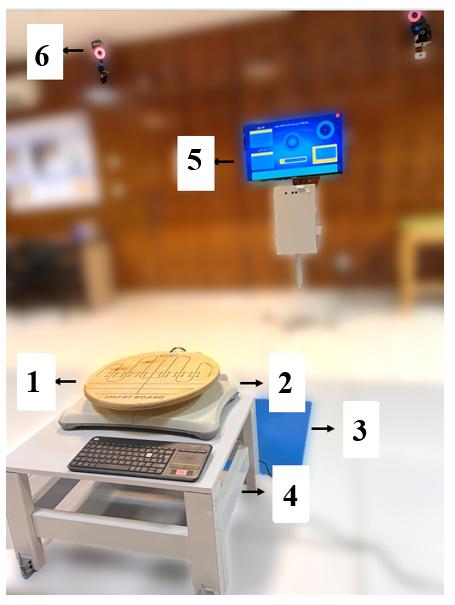
How can measured balance-board movement be linked to trunk-muscle forces and lumbar spinal loading in seated and standing tasks?
Integrating experimental signals with an adapted musculoskeletal model.
How can kinematic synergy analysis be used to study gait complexity and adaptability in children with cerebral palsy?
Co-authoring a study using kinematic synergy analysis.
Can learned models predict three-dimensional human posture during load-handling activities while maintaining geometric consistency?
Developing and evaluating Python-based KAN models.
How can laser-line images support weld-path detection and geometric inspection of rubber gaskets?
Developing visual detection and laser-triangulation measurement methods.
IEEE · ICBME
2025 32nd National and 10th International Iranian Conference on Biomedical Engineering (ICBME). Tabriz, Iran, pp. 269–274.
Seeking a fully funded PhD position starting in 2027. The common thread in my work is getting reliable, quantitative information out of noisy physical signals.
I am interested in two directions that build on this. In biomechanics and rehabilitation: musculoskeletal modelling, human movement, and rehabilitation or assistive technologies. In biomedical imaging and computer vision: quantitative image analysis, segmentation, and optical and laser-based sensing.